
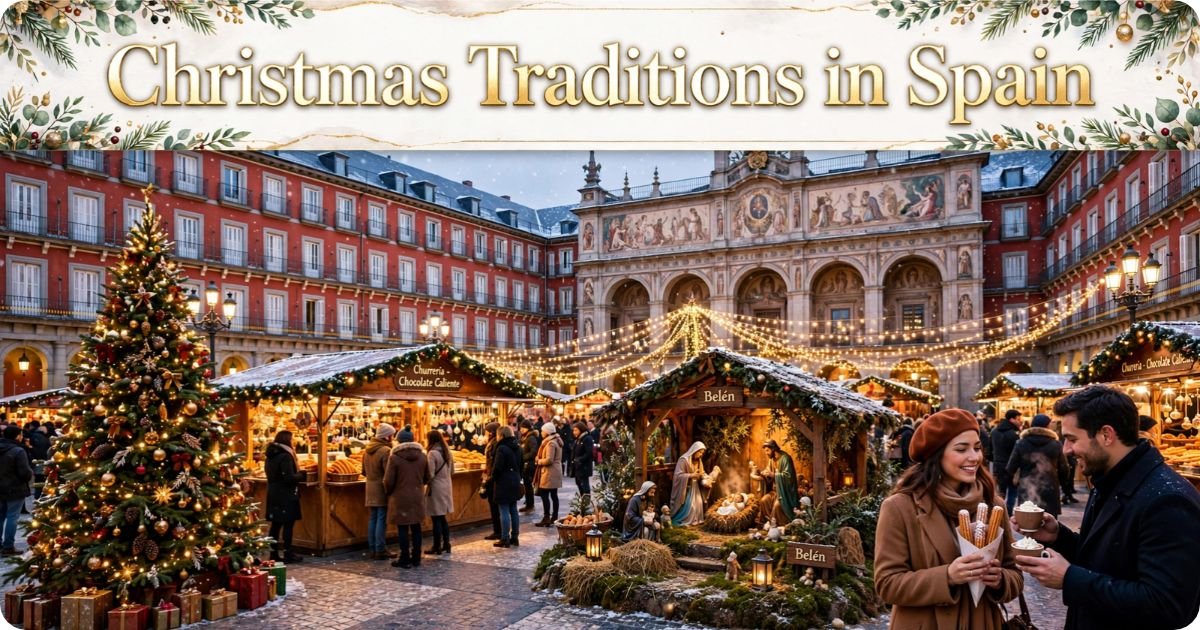
If your holiday plans end on December 25, you could miss some of Spain’s most memorable Christmas traditions. A traditional, family-oriented celebration, Spanish Christmas continues through January 6, making mid-December to early January a special time to gather and share moments. Explore five popular Christmas traditions in Spain and discover what the Christmas in Spain weather is like during the festive season.
1. El Gordo Christmas Lottery
Spain’s Christmas festivities begin on December 22 with the National Christmas Lottery, one of the most famous Christmas in Spain traditions that brings the country together around one eagerly awaited drawing. The top prize is popularly known as El Gordo, or “the big one.”
Throughout the morning, children sing the winning numbers in a distinctive chant as the results are announced. Because prize money is widely distributed, the excitement often spreads beyond individual winners: people celebrate together in the streets, making it one of the memorable 10 facts about Christmas in Spain and a lively start to the holiday season.
2. Meals Bursting with Christmas Flavours and Lots of Sweet Treats
Christmas meals in Spain are lavish celebrations, bringing family and friends together around a generous table. The most special evening for festive dining is Christmas Eve, December 24, when the meal may feature Ibérico ham, seafood, cheeses, and soup, followed by roast meat, fish, or stuffed turkey.
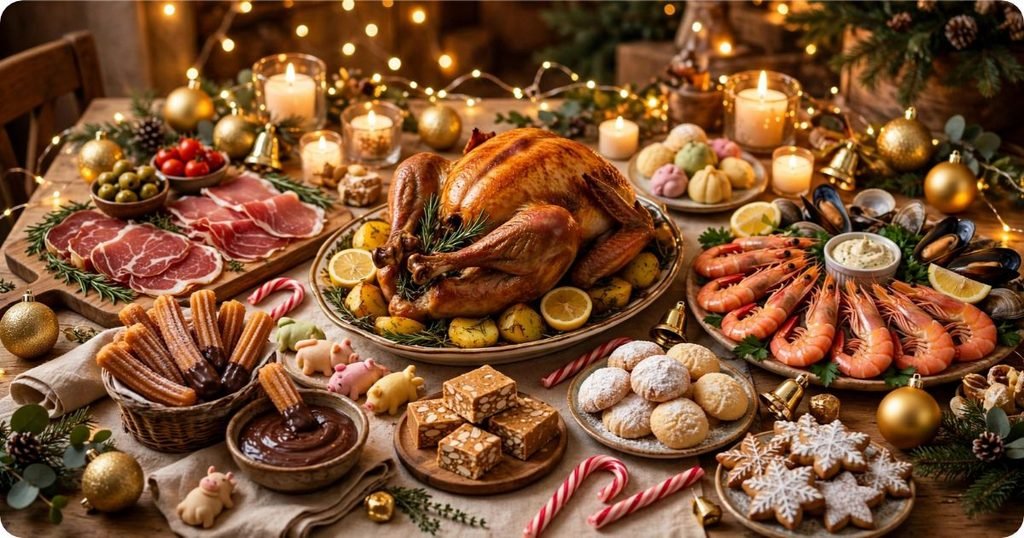
Dessert brings another round of holiday favorites. Turrón, marzipan, Spanish sweets, and shortbread add plenty of sweetness to the celebration, while Epiphany cake rounds out the season. With so many dishes to share, the meal is as much about lingering together as it is about what’s on the table.
For a fun festive twist, families can also enjoy Christmas in Spain Teletubbies content, especially when looking for Christmas-themed entertainment for children.
3. Colourful Christmas Lights
Colourful Christmas lights bring a festive atmosphere to Spain’s streets, delighting children and adults alike. From the end of November, towns and cities across the country usually illuminate their streets for the Christmas holidays.
Madrid, Barcelona, Malaga, and Vigo are known for their eye-catching Christmas decorations. After dark, visitors can enjoy a stroll past the lights, browse Christmas markets, and admire Nativity scenes—perhaps stopping to taste some traditional Christmas food in Spain, such as roasted chestnuts, along the way.
4. The 12 Most Festive Grapes of the Year
Eating 12 grapes at midnight on New Year’s Eve is a festive Spanish tradition. As the clock chimes to welcome the New Year, celebrants eat one grape with each chime. Each grape represents a chime, and the custom is believed to bring good luck for the year ahead.
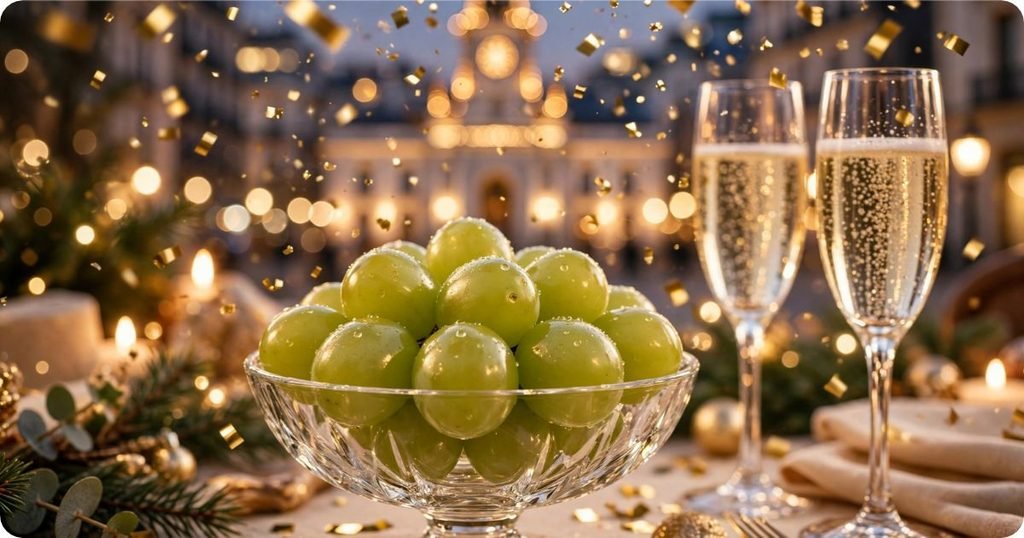
To join in, you can follow the famous Puerta del Sol clock in Madrid on television or celebrate directly at the square. Have your grapes ready before midnight, then enjoy the countdown one chime—and one grape—at a time.
Read More: 12 Free Things to do in Valencia in One Day (Itinerary)
10 Cool Things to do in Toledo, Spain In One Day
18+ Amazing Free Things to Do in Barcelona, Spain (Facts+Tips)
16+Free Things to do in Madrid for an Unforgettable Trip
12 Free Things to do in Valencia in One Day (Itinerary)
5. A Magical Night Full of Excitement
The night of January 5 is filled with anticipation as Melchior, Caspar, and Balthazar arrive in city parades. After the celebrations, the Three Wise Men visit homes overnight to deliver presents, bringing excitement to children as January 6 approaches. This is an important part of Christmas in Spain history.
In the days leading up to their arrival, children write letters describing how they behaved throughout the year and asking for gifts. Special mailboxes in shopping centers and leisure spaces give them a place to send their letters, which royal pages collect. Then comes the big night—and the hope of waking up to a special surprise.
Conclusion
Christmas in Spain is a reminder that the season can feel richer when it’s shaped by shared moments, local customs, and time with loved ones. To experience a little of that spirit, choose one Spanish Christmas tradition to learn about or try with family and friends this year.
FAQs
1. When does the Christmas season begin in Spain?
The brief doesn’t specify when it begins.
2. What are some Christmas traditions in Spain?
The brief doesn’t name any specific traditions.
3. What foods are traditionally served?
No traditional foods are listed in the brief.